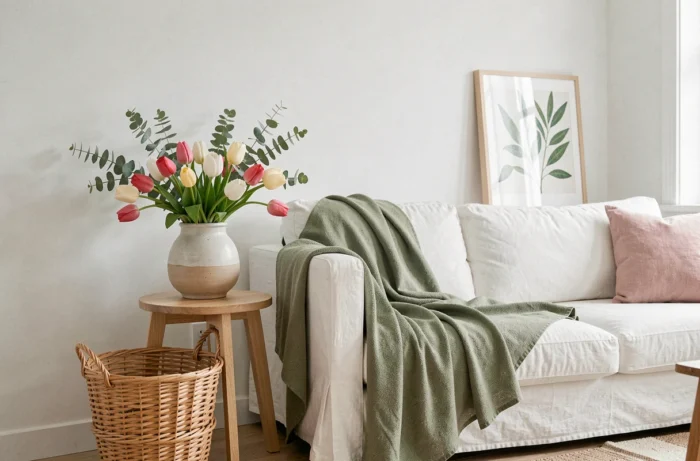
Spring decorating refers to the textiles, colours and greenery introduced into a home to make the most of the return of natural light. In practical terms, this means swapping heavy fabrics for lighter ones, bringing in brighter shades and making the most of longer, sunnier days. A few targeted changes are all it takes to transform the feel of a room without undertaking any renovation work.
Natural light and layout: the foundation of successful spring decorating
Before choosing colours or accessories, the first thing to consider is light. In spring, the days grow longer and sunlight reaches further into rooms. Making the most of this change may require nothing more than rearranging the furniture.
Clearing the areas around windows has an immediate effect. Placing a sofa or bookcase perpendicular to the light source, rather than in front of it, allows brightness to reach the back of the room. Simply repositioning a piece of furniture is often enough to make a room feel brighter without buying anything.
Heavy winter curtains can be replaced with lightweight linen or fine cotton sheers. These fabrics filter the light without blocking it and add a gentle movement that enhances the seasonal atmosphere. The window textile inspiration on Encore Le Printemps is a great example of how to bring this lightness into everyday spaces.
Mirrors are an often-overlooked way to make the most of natural light. Placed opposite a window or on an adjacent wall, a large mirror reflects daylight into the darkest areas of a living room or hallway.
Spring colour palettes: choosing shades that transform a space
Colour is the most noticeable way to refresh your home for spring. There are two approaches, and the right one depends mainly on how much of the space you’re willing to change.
Small accents or a full feature wall
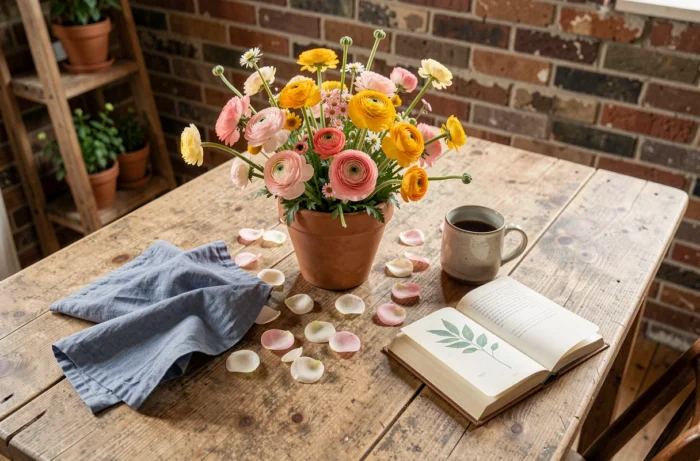
The classic approach is to introduce colour through accessories such as cushions, vases, picture frames and tablecloths. It’s reversible and affordable. Three accessories in the same shade create a cohesive look without requiring much effort.
A recent trend highlighted by several home décor publications takes things a step further: rather than limiting colour to small objects, some people prefer to paint an entire wall in a soft shade. Peach, sage green and straw yellow regularly feature in spring-inspired palettes.
To reduce the risk, try the colour on a small area first—a recess, door frame or alcove—before applying it to a whole wall. The result can vary considerably depending on the room’s aspect and ambient light.
Colour combinations to suit each room
- In the living room, soft greens such as sage or almond paired with off-white create a restful feel that stays bright even on overcast days.
- In the kitchen, accents of lemon yellow or soft terracotta add energy without overwhelming a space that is often compact.
- In the bedroom, blush pastels or lavender blues create a calm atmosphere, especially when paired with natural materials to keep the look from feeling too sweet.
Seasonal textiles: materials and labels to check
Swapping thick wool throws for cotton gauze or washed linen is the quickest way to give a room a springtime feel. Changing the textiles can alter how warm a room feels just as effectively as changing its colour scheme.
One point rarely mentioned in home décor guides is indoor air quality. When buying new cushions, curtains or covers, it’s worth checking the French “Émissions dans l’air intérieur” label. This A+ to C rating indicates the level of volatile organic compound emissions. A+ indicates the lowest emissions, which is especially important in a bedroom or a poorly ventilated living room.
Natural fibres such as linen, cotton and hemp also tend to age better. Their creased texture fits naturally into a spring-inspired interior without looking untidy, unlike synthetic fabrics, which show wear more readily.
Plants and flowers in spring décor: what really works
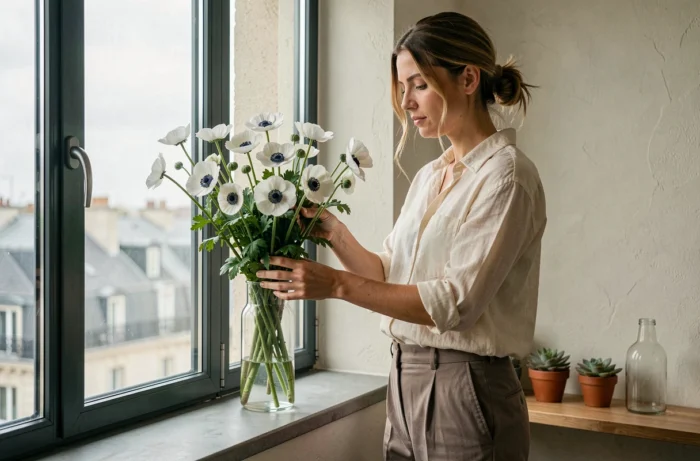
Plants are a spring decorating staple, and for good reason: a bunch of tulips or a striking leafy plant can instantly change the feel of a space. A few points are worth clarifying to avoid common misconceptions.
ADEME states that the ability of plants to remove pollutants from homes has not been proven. It’s better to air out your home regularly, maintain your ventilation system and limit sources of emissions than to rely on a ficus or peace lily to purify the air. Plants are wonderful decorative features, but they are not air filters.
For the best effect, group plants in two or three strategic spots rather than scattering them throughout the home.
- A tall plant, such as an indoor olive tree or fiddle-leaf fig, creates a natural focal point in a living room corner.
- A trio of small succulents on a shelf adds volume without requiring daily care.
- A bouquet of fresh flowers on a coffee table or hallway console refreshes the décor each week for just a few euros.
- Cherry or forsythia branches in a tall vase make a striking display on a minimal budget.
Reuse and sustainable decorating: find unique pieces without buying everything new
Refreshing your home for spring doesn’t mean filling an online shopping basket. Reusing items, one piece at a time, offers a practical alternative. Flea markets, reuse centres and second-hand platforms sell decorative items such as vases, picture frames and lamps for far less than new ones, often with a character that mass-produced pieces lack.
A carefully chosen vintage find adds more personality than a set of new accessories. An antique mirror, a coloured glass carafe or a small distressed piece of furniture is all it takes to give a room a distinctive style.
The key to spring decorating is creating harmony between the light, the materials and the few touches of colour or greenery you introduce. Not every room in the home needs the same treatment: a living room might call for a complete palette change, while a bedroom may need nothing more than a new bedspread and a fresh bouquet.