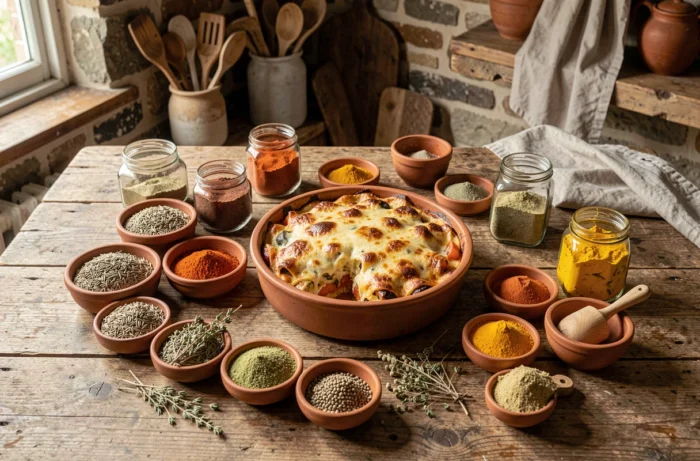
A zucchini gratin comes out of the oven with a perfect golden crust, but in the mouth, it’s flat. The cheese and cream have done their job, the vegetables are cooked just right, and yet it lacks the depth that transforms a decent dish into one that you want to ask for again.
The problem rarely lies with the recipe itself: it’s the seasoning that falls short. Choosing the right spices for vegetables and gratins means understanding which aromatic works with which type of cooking, and when to add it.
Long cooking in the oven: spices that withstand heat
In a gratin, the temperature often exceeds 180 °C for about thirty minutes. Not all spices can withstand this treatment. Some lose their aroma, while others develop bitterness. Starting from this constraint helps eliminate common mistakes.
Nutmeg remains the reference for creamy gratins for a simple reason: its aroma holds up well to prolonged heat and pairs well with sauces based on milk or cream. It is grated directly into the béchamel, not on top of the dish where it would burn.
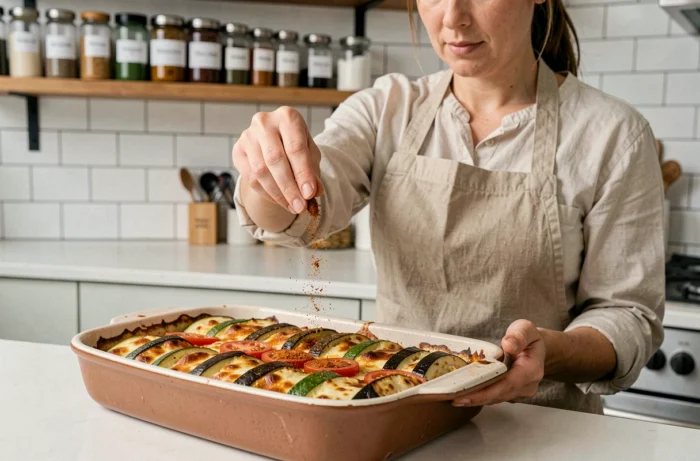
Sweet or smoked paprika adds a round warmth without aggressive spiciness. Mixed with a drizzle of olive oil and brushed onto the vegetables before baking, it colors the surface and gives that slightly grilled note. Ground cumin works on the same principle: it integrates into the preparation rather than being used as a finishing touch.
However, among the spices recommended by Mon Blog Cuisine, there are more delicate aromatics like ground coriander, which benefits from being added midway through cooking to retain its lemony fragrance.
Herbs de Provence (thyme, rosemary, savory) are a special case. Dried, they release their essential oils slowly and withstand the oven very well. Fresh, they blacken quickly. For a gratin, always prefer dried herbs by dispersing them in the sauce rather than on the surface.
Spice pairings and vegetable families for gratins and roasted dishes
Not all vegetables have the same density or water content. A juicy zucchini does not react like a starchy potato. The pairings change based on this reality.
Root vegetables and tubers
Carrots, parsnips, sweet potatoes, potatoes: these dense vegetables absorb spices and release them during tasting. Cumin, curry, and black pepper work particularly well here. Curry brings a complex flavor base that compensates for the natural blandness of tubers baked in the oven.
For potatoes in gratin, the combination of nutmeg and white pepper remains hard to beat. White pepper, less pungent than black, blends into the cream without creating unpleasant hot spots.
Summer vegetables: zucchinis, eggplants, tomatoes
These water-rich vegetables tend to dilute seasoning while cooking. Compensate by being a bit more generous with the dosage and choosing spices with a persistent profile. Espelette pepper, smoked paprika, and ground cumin hold up well in these preparations.
- Zucchini: sweet paprika, dried thyme, and a hint of chili for contrast
- Eggplants: cumin, ground coriander, and a touch of cinnamon for recipes with an Eastern inspiration
- Tomatoes: oregano, herbs de Provence, and black pepper, the classic pairing that works every time
Cabbages and leafy greens
Cauliflower in gratin calls for spices that break its sulfurous notes. Nutmeg and curry mask the sulfur notes of the cabbage while adding roundness. For spinach, stick with nutmeg, paired with garlic powder.
For gratins of leafy vegetables, steaming rather than boiling preserves the interesting compounds of the vegetable better. This is a method detail that directly influences the final taste.
Measuring spices in a gratin without overwhelming the dish
The gratin is a dish where cream, butter, and cheese already occupy a lot of flavor space. Adding too many spices amounts to drowning the result. We work in layers, not by accumulation.
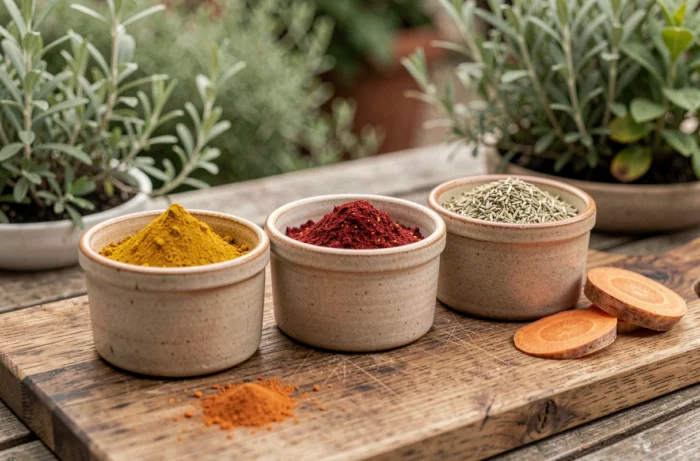
Two to three spices maximum per gratin is a rule that avoids confusion in the mouth. One base spice (nutmeg, cumin, or curry), one accent spice (pepper, sweet chili), and possibly one aromatic herb (thyme, rosemary) are enough to structure the flavor.
The timing of the addition is as important as the choice. Ground spices are mixed into the sauce or cream before assembling the gratin. Sprinkling directly on the grated cheese exposes the spices to direct heat that degrades them. Pepper, in particular, loses its aromatic complexity when roasted dry.
Ready-to-use spice blends: when to use them for your vegetable recipes
Blends like ras el hanout, za’atar, or those labeled “special vegetables” can simplify everyday cooking. Their main advantage is consistency: the dosage is already done, and the result is predictable.
Ras el hanout, with its floral and warm notes, transforms a simple root vegetable gratin into a fragrant dish. Za’atar (thyme, sumac, sesame) is used more as a finishing touch, sprinkled after cooking on roasted vegetables.
- Ras el hanout: ideal for carrots, butternut squash, and sweet potatoes baked
- Za’atar: as a finishing touch on grilled zucchinis, roasted eggplants, or vegetable hummus
- Herbs de Provence blend: a versatile base for all Mediterranean gratins
- Sweet curry: suitable for cauliflower, leek, or potato gratins
Check the composition of blends before purchasing: some contain a significant amount of salt, which requires reducing the seasoning of the rest of the dish. The sanitary quality of spices also deserves attention, especially in bulk. In case of a product recall, it’s the specific lot that needs to be checked, not the type of spice in general.
A well-spiced gratin doesn’t require an entire cupboard or sophisticated combinations. Two well-chosen spices, added at the right time in the right layer of the dish, are enough to create a result that cream and cheese alone will never achieve.