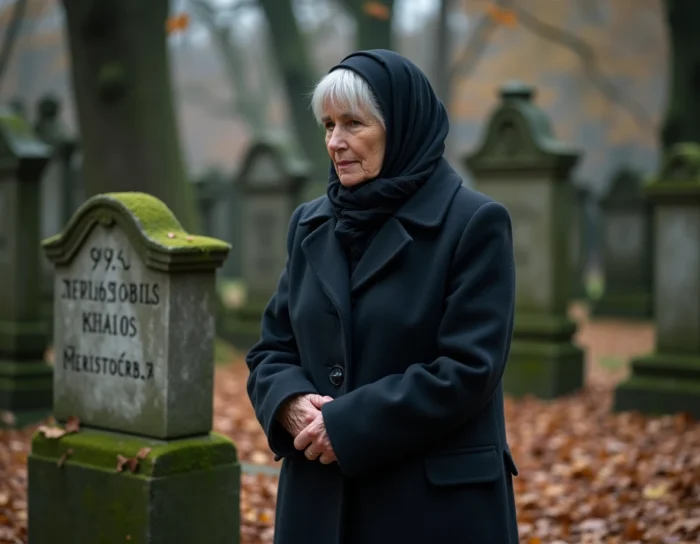
Funeral music is not just a background sound played during a ceremony. It structures the time of mourning, channels collective emotions, and fixes the memory of a person in the minds of those who remain. Behind every song chosen for a funeral lies a tension between liturgical tradition, the deceased’s personal taste, and practical constraints that families often discover at the last moment.
Film soundtracks at funerals: a game-changing repertoire
The musical choice at a funeral has long been limited to religious hymns or a few classics from the repertoire (Ave Maria, Mozart’s Requiem). For about fifteen years, film music has increasingly found its way into funeral ceremonies.
Instrumental compositions like those from Interstellar by Hans Zimmer or Schindler’s List by John Williams are now circulating in civil ceremony halls. Their non-verbal nature makes them compatible with various ritual frameworks, whether secular or religious, while carrying an immediately recognizable emotional weight.
This shift towards popular culture reflects a deeper change: mourning music is stepping out of the strict funeral framework and into the public space. In 2026, singer Mathilde spoke on France Info about the place of mourning in contemporary song, a sign that the subject is no longer confined to practical funeral guides. The repertoire available for funeral and death songs extends well beyond traditional hymns, and families are taking advantage of it.
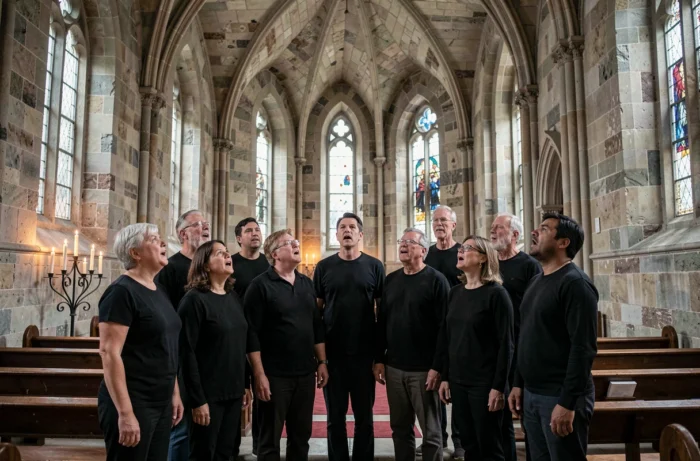
Preparing your funeral music while alive: a still little-known practice
Anticipating the choice of songs for one’s own funeral remains a minority approach, but it is growing. Testimonials collected by professionals in the funeral sector report preparation times of four to six months for individuals who engage in this planning.
This anticipation does not only concern the choice of a piece. It involves selecting liturgical songs, possibly adding secular music, and sometimes writing texts or letters intended to be read during musical moments. The process transforms music into a pre-mourning tool: the deceased organizes their own sound staging for their departure, which alters the relationship of loved ones to the ceremony.
Classic guides on musical choices for funerals almost never address this aspect. They focus on the moment of the ceremony, not on the months leading up to it. Field reports vary on this point: some families find real comfort in respecting the musical wishes of the deceased, while others experience this requirement as an additional constraint in an already saturated moment of practical decisions.
Liturgical constraints and secular music: what the Catholic Church really allows
The idea that any song can be played in a church is false. The Catholic Church maintains a precise framework for music during religious funerals. Secular songs are not allowed during the Eucharistic liturgy itself, but they may be tolerated at certain peripheral moments of the ceremony (entrance of the coffin, exit of the assembly).
This distinction between liturgical time and welcoming time creates a gray area that families and priests negotiate on a case-by-case basis. A French pop song played at the entrance of the coffin generally poses no problem. The same piece played during communion will be refused.
For secular ceremonies in civil ceremony halls, no repertoire restrictions apply. Families choose freely between:
- Popular songs related to the deceased’s life (favorite song, piece associated with a couple or family memory)
- Classical or contemporary instrumental pieces, often favored for their emotional neutrality
- Personal recordings (voice of the deceased, piece played by a musician relative), an option that is growing with the digitization of family archives
The choice of ceremony location largely determines the possible musical scope. A secular ceremony offers total freedom of repertoire, whereas a religious ceremony imposes a framework that can frustrate families attached to specific pieces.
The funeral song as collective memory: beyond the ceremony
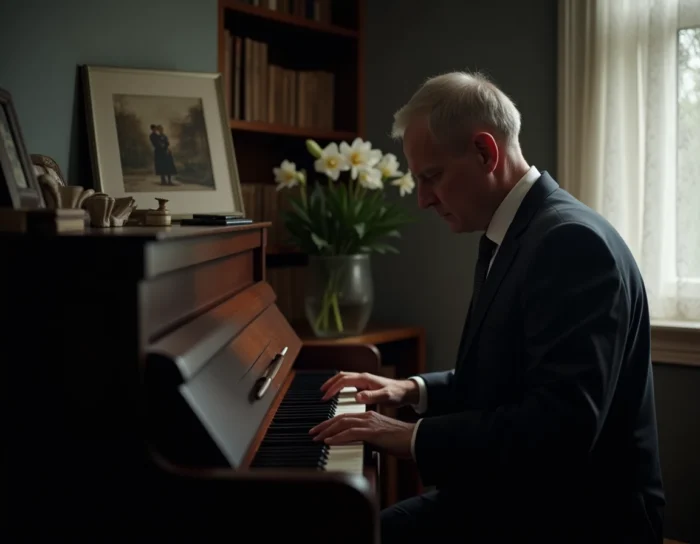
Reducing funeral music to its role during the funeral is to overlook its most enduring function. Songs associated with a deceased continue to circulate in family memory long after the burial. A piece heard on the radio years later can revive a memory with an intensity that photos or personal objects do not always reach.
Ethnomusicology documents this function in many cultures: praise songs and sung narratives inscribe the deceased in the memory of the group. West African traditions, for example, use balafon funeral songs among the Senoufo that do not serve to accompany sadness, but to tell the life of the deceased and to fix their story in the community repertoire.
In contemporary Western societies, this memorial function takes different forms but remains active. The deceased’s digital playlists, preserved on streaming platforms, sometimes become sound archives consulted by loved ones for years. Musical mourning does not end at the cemetery gate.
Funeral music oscillates between two poles: the raw expression of grief and the construction of a shareable memory. Families that choose a song for a funeral rarely make this choice with thoughts of the years to come. The song selected for the tribute of the day becomes the sonic marker of an absence, far beyond what the ceremony itself might have suggested.