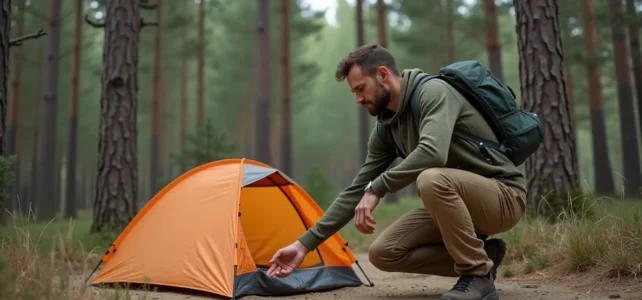
Wild camping in the Landes is based on a legal framework that is more nuanced than the simple “it’s forbidden” often repeated. The general principle, derived from the Urban Planning Code, allows free camping under certain conditions: agreement from the landowner, compliance with local zoning, and adherence to municipal or prefectural orders in force. Understanding these mechanisms allows one to enjoy the Landes forest massif and its coastline without risking a fine.
Prefectural orders and fire risk: the constraint that campers underestimate
Before choosing a location, the first check concerns forest fire orders. The Atlantic prefectures, including that of the Landes, have tightened access restrictions to forest areas during high-risk periods. These orders can prohibit any isolated bivouac in and around wooded areas, including on private plots where the owner may have given their consent.
Recommended read : Distance Learning: Discover the Best Solutions for Training from Home
The level of vigilance (orange, red, black) determines what is permitted. In black vigilance, access to forests is completely closed. Even in moderate vigilance, campfires remain prohibited in almost the entire department.
To check the status of restrictions before leaving, two tools are useful: the Landes prefecture website (which publishes orders in real-time) and the Urbanism Geoportal, which allows you to consult the applicable zoning for a given plot. This step takes a few minutes and avoids on-site fines.
See also : Our tips for buying perfume online with confidence and at the best price
The choice to wild camp in the Landes therefore involves cross-referencing two pieces of information: the land ownership status and the current fire risk level.

Pine forests, lakes, and back-dunes: three types of terrain, three different realities
The Landes do not form a homogeneous block. The department is divided into areas with very distinct constraints for bivouacking.
The forest massif
The Landes de Gascogne forest, the largest cultivated forest in Western Europe, naturally attracts campers. The sandy soil, maritime pines, and apparent isolation make it a tempting area. The reality is more complex: the majority of this forest belongs to private owners. Pitching a tent without explicit permission from the owner constitutes an offense, even in the absence of a fence or sign.
In practice, some forest owners accept a one-night bivouac when contacted in advance. Municipal plots, identifiable via the land registry, sometimes offer more flexibility if the town hall does not prohibit it by order.
The shores of the lakes
The Landes lakes (Biscarrosse, Aureilhan, Seignosse, among others) have partially accessible shores. Public banks sometimes tolerate discreet one-night bivouacs, provided no trace is left and one does not set up in a protected area. Several of these lakes border nature reserves or Natura 2000 areas where camping is strictly prohibited, regardless of the duration.
The coastal back-dune
The coastal strip between the ocean and the forest seems ideal for a bivouac facing the waves. However, this area is the most regulated. The dunes are subject to enhanced environmental protections, and most coastal municipalities (Capbreton, Seignosse, Mimizan) explicitly prohibit overnight parking and camping on the public maritime domain and its surroundings.
Legal bivouac in the Landes: concrete conditions to meet
The distinction between bivouac and wild camping is not just a matter of vocabulary. Bivouac refers to a light setup for a single night, without permanent facilities. Wild camping implies a longer stay, often with heavier equipment.
To bivouac legally in the Landes territory, several conditions must be met simultaneously:
- Obtain the agreement of the landowner or manager, even for a single night. On communal land, the town hall’s agreement serves as authorization.
- Check for the absence of municipal or prefectural orders prohibiting bivouac in the targeted area, especially during the summer when drought orders multiply.
- Ensure that the land is not located within a protected perimeter (nature reserve, classified site, Natura 2000 area, water catchment perimeter).
- Do not light a fire, do not bury anything, and dismantle the setup at dawn.
This accumulation of checks may seem burdensome. It reflects the reality of a department where the forest represents a massive part of the territory and where the fire risk conditions all outdoor activities.
Alternatives to isolated bivouac: camping with locals and natural areas
For those seeking the spirit of free camping without the administrative complexity, two options deserve consideration.
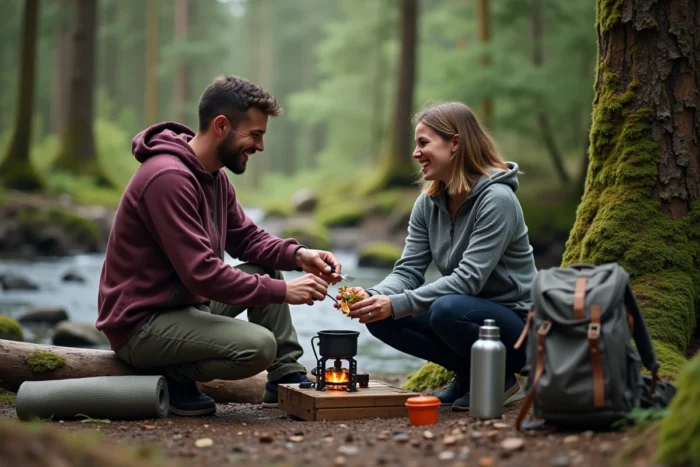
Camping with locals, regulated by law, allows you to pitch your tent in a private garden with the owner’s consent. Specialized platforms list locations in the Landes, often on the edge of forests or near lakes. The advantage: the legal framework is clear, the owner ensures the compliance of their land, and the experience remains close to nature.
Natural camping areas, limited to a few dozen spots, offer a compromise between minimal comfort (water point, basic sanitation) and immersion in nature. Several operate in the Landes hinterland, far from the tourist complexes on the coast.
The Landes department allows for free bivouacking provided one accepts a real preparatory effort. Checking land ownership, consulting orders, respecting protected areas: these steps transform an improvised outing into a legal night under the pines. The Landes massif remains a remarkable playground for nature camping, as long as one does not confuse the absence of a fence with tacit permission.