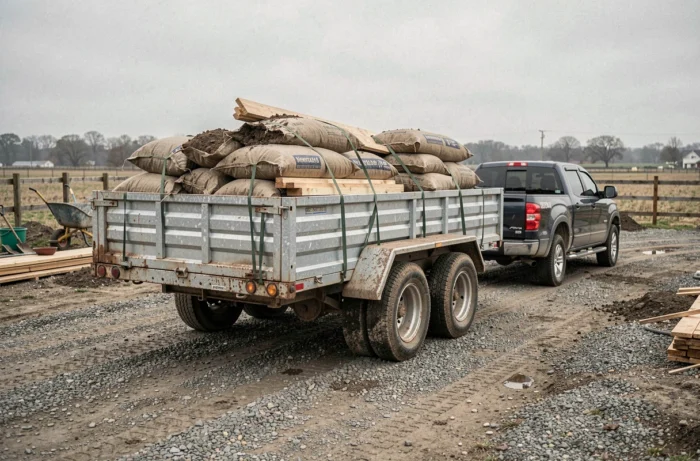
A double axle trailer is distinguished from a single axle model by a technical point that conditions everything else: the distribution of the load over four wheels instead of two. This mechanical detail modifies road behavior, applicable regulatory thresholds, and the type of transportable equipment. For construction work or regular transportation of heavy loads, the choice between one or two axles is not just a budget question.
Mandatory braking and GVW: what double axle implies in practice
Competitors mention stability and comfort, but often overlook a determining technical fact. In real use, a double axle trailer intended for work (transporting mini-excavators, compactors, pallets of materials) is almost always above the GVW thresholds where braking becomes legally mandatory.
This requirement changes the game on several levels. Braking distances are shorter, mechanical wear on the towing vehicle decreases, and the behavior of the convoy remains predictable on descents or during emergency braking. A braked double axle protects both the driver and the transported equipment.
In parallel, any GVW exceeding the threshold set by regulations leads to a registration document specific to the trailer, with dedicated registration. Before purchasing, it is necessary to check if a category B license is sufficient or if the combined weight of the towing vehicle and the trailer requires a BE license or the B96 endorsement. Consulting a comparison like that of a double axle trailer at Brico Dépôt allows for comparing the GVWs offered with the license constraints.
Payload and profitability of trips with a double axle trailer
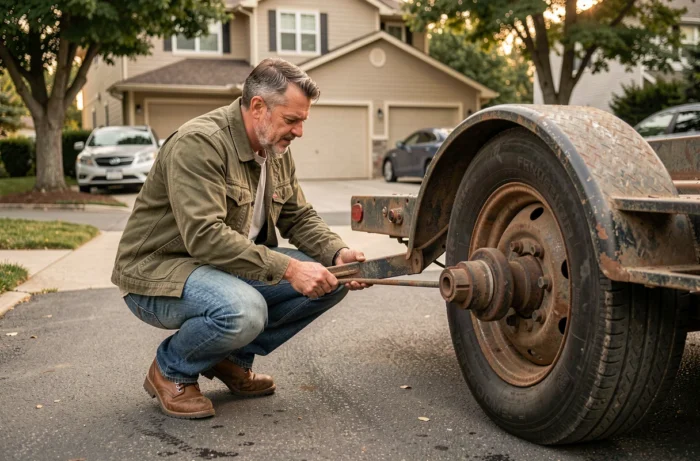
One argument rarely quantified by existing articles concerns the actually usable payload. On a single axle model, a significant portion of the GVW is absorbed by the weight of the trailer itself. Result: the margin for loading equipment quickly diminishes.
With a double axle, the more robust chassis allows for a higher GVW, but more importantly, the payload-to-total-weight ratio is often more favorable. For a craftsman or an individual who regularly transports construction materials, this means fewer trips for the same amount of goods. Over a construction season, the savings in time and fuel become tangible.
Field feedback varies on one point: profitability depends on the frequency of use. For two or three trips a year, a single axle model is often sufficient. The double axle makes the most sense from monthly or weekly use, when the robustness of the running gear and the load capacity justify the additional cost of purchase and maintenance.
Stability of the double axle trailer convoy on the road and during maneuvers
The distribution of mass over four wheels lowers the center of gravity of the load. On the highway or in crosswinds, the swaying phenomenon is significantly reduced compared to a single axle. This stability is not an accessory comfort: it conditions the safety of the convoy, especially when the load is bulky (machines, wood, panels).
During maneuvers, the double axle requires a wider turning radius. Reversing in a narrow driveway or parking on a tight construction site requires anticipation. Drivers accustomed to a single axle are sometimes surprised by the inertia of the rear end during U-turns.
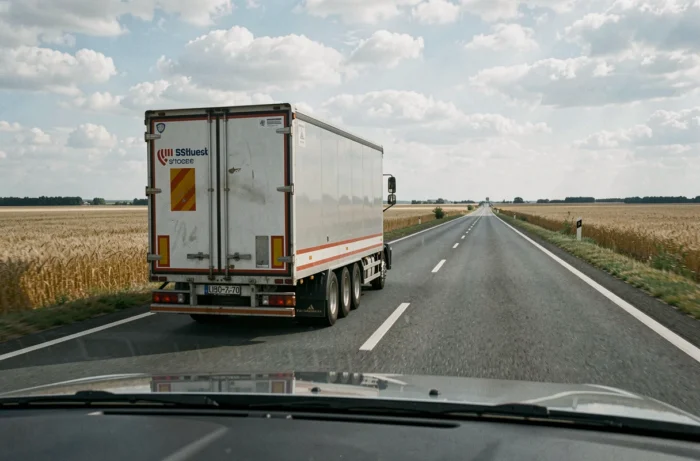
A often overlooked advantage concerns flat tires. If one tire deflates, the second axle keeps the trailer supported. The convoy remains maneuverable until a safe location, whereas a single axle requires an immediate stop and a wheel change on-site, sometimes at the roadside.
Maintenance and actual cost of a double axle trailer
The double axle multiplies wear parts: four tires instead of two, two sets of bearings, a duplicated braking system. The annual maintenance budget is therefore higher than that of a single axle model. Here are the areas to monitor:
- The tires, whose wear can be asymmetrical if the alignment of the two axles is not checked regularly
- The brake linings, which are more stressed on long journeys with a load or in hilly areas
- The wheel bearings, sensitive to moisture if the trailer is parked outside for long periods between uses
- The inertia brake cable or linkage, which connects the braking system to the drawbar and wears out over time
Regular preventive maintenance costs less than emergency repairs on the roadside. Greasing the bearings and checking the alignment are the two most cost-effective actions in the long run.
When a double axle is not justified
Not every trailer needs two axles. For occasional use (dump, small move, transporting a scooter), a non-braked single axle model remains lighter, more maneuverable, and cheaper to purchase and maintain.
The empty weight of a double axle trailer also penalizes the consumption of the towing vehicle. If the transported load consistently remains well below the maximum GVW, the overweight of the trailer cancels out part of the advantage. The choice is therefore made based on the actual load, not the theoretical maximum load.
The available data does not allow for setting a universal threshold. The right question remains: what weight is transported, how often, and on what type of trip. A braked double axle trailer is fully justified as soon as the load regularly exceeds the capacity of a single axle or when the safety of the convoy becomes a priority criterion.