Florent Pagny acquired a fortified farmhouse in Côte-d’Or at the beginning of 2025, in the municipality of Échevannes, a few kilometers from Is-sur-Tille. This return to Burgundy, his native region, is not just a heritage choice. It is part of a personal reconstruction following the announcement of his cancer in January 2022, and a clear desire to be closer to his parents, who live near Beaune.
The Ferme du Fossé in Échevannes: a fortified house classified as a historical monument
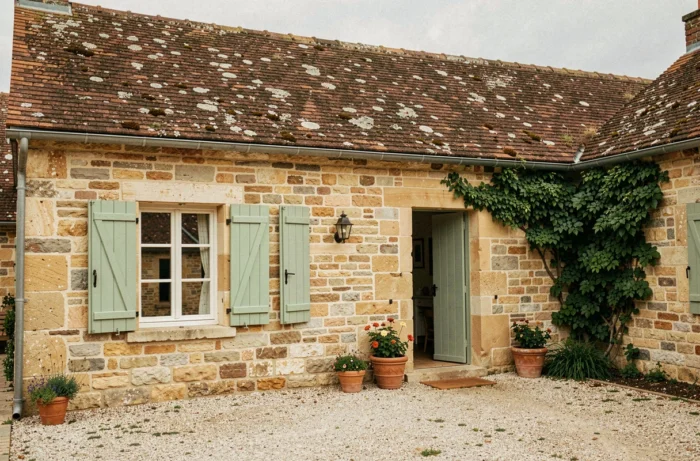
The property acquired by Florent Pagny is not an ordinary house. The Ferme du Fossé is a fortified house dating back to the early 11th century, situated in a loop of the Tille River, north of the village of Échevannes. The site is classified as a historical monument, featuring moats, a drawbridge, and defensive architecture characteristic of rural Burgundian fortifications.
The municipality of Échevannes has about 300 inhabitants. Michel Boirin, mayor since 1989, publicly confirmed the transaction in February 2025, stating that he had spoken with the singer on the phone. The sale was finalized at the end of 2024, after Pagny discovered the property during the summer of that same year.
An article detailing the location of Florent Pagny’s mother in Burgundy reminds us that this family proximity played a significant role in the purchasing decision. The singer, originally from Chalon-sur-Saône, grew up in Burgundy before building his career in Paris and later settling in Patagonia and Portugal.
Échevannes and Is-sur-Tille: the geography of a residential choice in Côte-d’Or
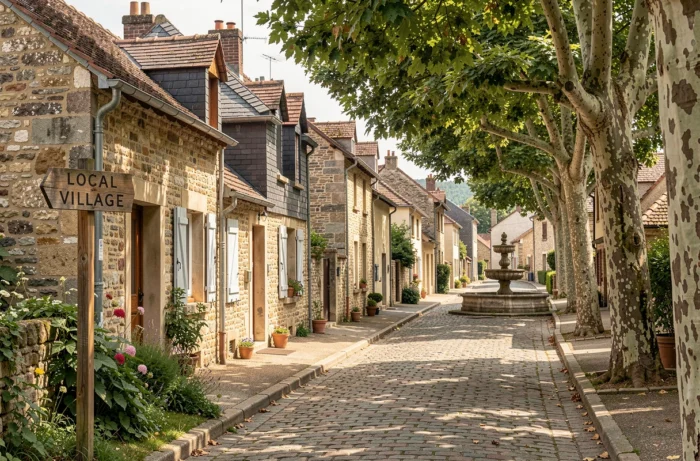
Échevannes is located in the north of Côte-d’Or, in close proximity to Is-sur-Tille, a small town that offers shops, medical services, and a train station. The fortified farmhouse is situated a few hundred meters from an industrial area where a SEB factory is located, a detail that anchors this place in an ordinary rural landscape, far from the image of an isolated estate.
This geographical positioning deserves attention. The Burgundy of Florent Pagny is not the tourist wine route between Beaune and Dijon. Échevannes is a discreet village on the Langres plateau, without any particular notoriety. The singer chose a location that is removed from media circuits but sufficiently connected to organize his professional travels and medical follow-ups.
His parents live near Beaune, less than an hour’s drive away. This reasonable distance allows for regular visits without cohabitation, a balance that Pagny has mentioned in several television interviews.
Florent Pagny in Burgundy: a return to his roots linked to illness
In interviews broadcast on TF1 in the show “Sept à Huit,” Florent Pagny explicitly spoke of a “return to his roots phase” in his Burgundian property. This biographical positioning connects Burgundy (his native region, Chalon-sur-Saône) to a period of personal reclamation following his lung cancer treatment.
The Ferme du Fossé has become his European base, serving as both his primary residence in France, a starting point for his tours, and a place of rest between medical follow-up sessions. Before this purchase, Pagny split his time between Argentine Patagonia and Portugal, two residences far from French hospital centers.
His partner Azucena was initially not enthusiastic about living in a medieval fortified farmhouse. Several sources indicate that she eventually became convinced by the atmosphere of the place. Audrey Crespo-Mara, who visited the property for a report, described “very good vibes” on site.
The proximity to his parents, an underestimated factor
Press articles have extensively covered the heritage aspect of the purchase (historical monument, medieval architecture, moats). However, the family dimension of the residential choice remains poorly documented. Pagny has mentioned several times his desire to spend time with his parents, who have long been settled in Beaune.
This logic of family closeness explains why the singer sought a property in Burgundy rather than in another French region. The connection to Chalon-sur-Saône, his hometown, and to Beaune, where his parents live, creates a coherent geographical triangle around Côte-d’Or.
Historical monument and daily life: the constraints of an 11th-century fortified farmhouse
Acquiring a property classified as a historical monument entails specific obligations regarding work and maintenance. Any modification to the structure or facades must be validated by the Architects of the Buildings of France. The materials used for restorations must respect original techniques, which increases costs and extends timelines.
For the Ferme du Fossé, several elements require particular attention:
- The moats and drawbridge, hydraulic and mechanical structures that require regular maintenance to prevent siltation and degradation
- The stone enclosure walls, exposed to the freeze-thaw cycles characteristic of the continental Burgundian climate
- The interior layout, which must reconcile modern comfort with the preservation of classified architectural elements
Living in a historical monument on a daily basis requires constant compromises between the desired living environment and conservation requirements. The drawbridge was, in fact, raised during the first reports on site, a sign that the family had not yet fully settled in.
Private life and media coverage: where to draw the line
The question of the precise location of Florent Pagny’s mother’s house falls under private life. Public information indicates that his parents reside near Beaune, without a detailed address. This discretion is intentional.
Pagny has structured his return to Burgundy around a balance between media visibility and protection of his family circle. He agrees to show his fortified farmhouse on television but does not disclose the home of his parents. The distinction is clear: the architectural heritage can be publicized, while family daily life remains private.
The choice of Échevannes, a village without any particular tourist appeal, is part of this strategy. Far from the residential areas favored by public figures, the municipality offers a form of geographical anonymity that neither Paris nor the wine route of Beaune could guarantee.