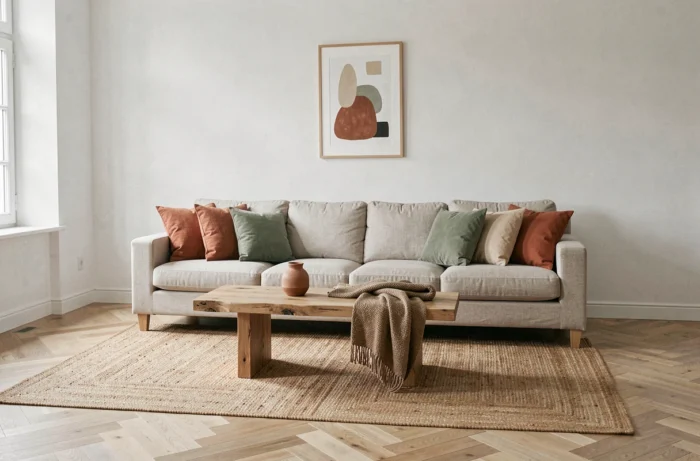
Interior decoration in 2026 moves away from uniformly white or gray interiors to return to earthy palettes, raw materials, and enveloping shapes. This aesthetic shift changes how we choose a sofa, wall color, or flooring. Understanding these trends allows for sustainable choices rather than following fleeting fashions.
Earthy palettes and raw materials: the decor vocabulary of 2026
The dominant colors this year revolve around terracotta, ochre, and deep browns. These shades, paired with bright off-white (in line with the “Cloud Dancer” announced by Pantone), create soft contrasts that warm a space without darkening it.
Solid wood, artisanal ceramics, and natural stone are gradually replacing glossy finishes and smooth surfaces. These materials age, patinate, and gain character over time. A stone countertop or a raw wood shelf does not look the same after five years as a laminate that chips.
By browsing decor ideas on Niddou, one can easily see how these materials integrate into rooms of various sizes, from studios to spacious living areas. This approach works well in renovations as well as simple refreshes.
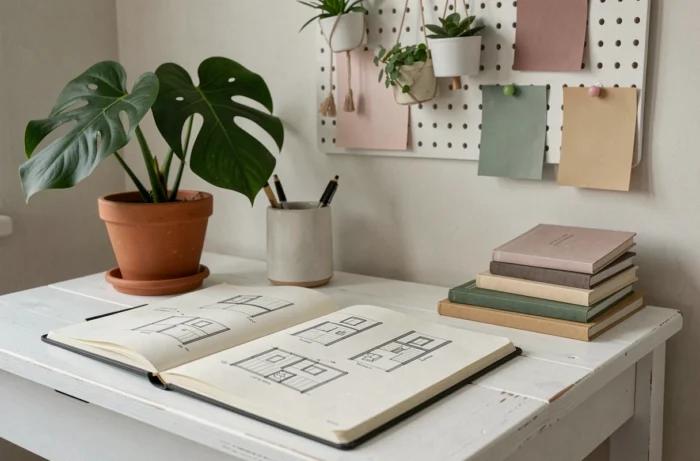
Second-hand and used furniture: a decor reflex that has become structural
The French market for new furniture has been declining since 2023. In the first half of 2026, the drop reaches 2.6% in value according to the IPEA economic note. At the same time, second-hand sales are on the rise: about one in four pieces of furniture sold in France is now used, according to a study by Leboncoin Solutions Pro published in June 2026.
This shift is not just economic. The majority of buyers claim to have no prejudice against second-hand furniture. The ecological argument matters, but it is primarily the possibility of finding unique pieces (a 1970s wooden dresser, a vintage rattan chair) that fuels the trend.
Integrating second-hand without a flea market effect
The common pitfall is to accumulate finds without coherence. To avoid an interior that looks like a garage sale, three guidelines help filter:
- Limit the color palette of second-hand furniture to two or three tones that are compatible with existing walls and floors.
- Favor pieces with a sound structure (joints, legs, springs) even if it means reupholstering or repainting them yourself.
- Reserve second-hand for bulky furniture (sofa, sideboard, table) and keep new items for fast-wearing elements (bedding, office seating).
This method produces interiors with character while keeping the overall budget of the home in check.
Color and natural light: two levers that work together
Painting a wall in dark ochre in a north-facing room without light compensation results in a stifling effect. Color is always chosen based on the available light, not the other way around. This is a principle of interior architecture often overlooked in mainstream decor guides.
A well-exposed room can support saturated hues on one or two walls. A dark room benefits from concentrating strong color on a single wall while keeping other surfaces in light or neutral tones. Bright off-white, very present in the 2026 proposals, serves precisely as a backdrop to absorb and redistribute light.
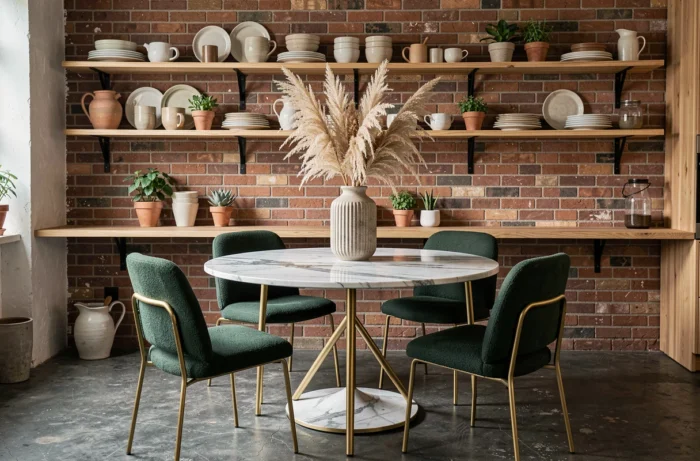
Multiplying light sources rather than watts
A single ceiling light creates shadow zones and flattens volumes. The current trend in decoration is to distribute multiple light points at different heights: a table lamp on a low piece of furniture, a pendant above a table, a reading lamp near an armchair.
Three well-placed light sources transform a room more than a single powerful fixture. This approach also allows for modulating the atmosphere according to the time of day, without heavy renovations.
Renovating your interior in stages: prioritizing high visual impact areas
The temptation to redo everything at once often leads to compromises on the quality of finishes. A step-by-step approach, starting with the most visible elements, produces a more satisfying result over time.
- Walls (paint or covering) represent the largest visible surface in a room. This is the area that most radically alters the perception of space.
- The floor (wooden parquet, tiles, polished concrete) sets the overall style. Solid wood flooring leans towards warmth, while polished concrete suggests a contemporary feel.
- Structuring furniture (sofa, table, main storage) defines the flow and daily use of each room.
- Textiles and accessories (curtains, cushions, rugs) provide the finishing touch and can be easily renewed.
Starting with the walls and floor before investing in furniture avoids the discovery that a new sofa clashes with an aging covering. This logic applies equally to a complete home or the renovation of a single room.
Budget and concrete trade-offs
Building or renovating a home involves constant trade-offs. Focusing the budget on durable materials (solid wood, ceramics, stone) for fixed elements, while accepting more accessible solutions for replaceable items, constitutes an effective balance.
A wall painted with quality mineral paint will last longer than an entry-level paint applied twice. The real cost of a material includes its lifespan, not just its purchase price.
The 2026 decor trends converge towards less uniform interiors, where natural materials and earthy colors replace smooth and neutral surfaces. The increasing reliance on second-hand furniture reinforces this direction. However, the choice of a color or material only works in relation to the light and structure of each room, two parameters that inspiration catalogs cannot evaluate for you.