
In France, the average cost of a burial with interment is around 5,000 euros. This amount covers dozens of distinct items, from the coffin to cemetery fees, including the transportation of the body and the ceremony. Understanding the structure of this bill allows one to distinguish what is legally required from what is a choice, and to avoid paying for unnecessary services at a time when clarity is often lacking.
Standardized funeral quote: what changes with the decree of February 2025
Before detailing the expense items, a recent regulatory point deserves to be made. Since the decree of February 11, 2025, funeral operators must present their prices according to a standardized quote model. This document explicitly separates three categories: mandatory services, optional options, and expenses advanced on behalf of third parties (municipal taxes, cemetery fees).
This distinction changes the way a quote is read. Where some families accepted a global package without visibility, the new format requires identifying each line. From August 2026, a standardized information notice must also be made available, reminding that the funeral quote is free and without obligation.
To know precisely how much a burial costs in France, this regulatory reading grid now serves as the starting point for any comparison between funeral homes.
Mandatory services and items that inflate the bill
Every burial involves a core of mandatory funeral services: a coffin that complies with current standards, a burial shroud, the removal of cardiac prostheses if applicable, and the transportation of the body. This core represents a significant part of the total cost, but it is relatively non-negotiable from one operator to another.
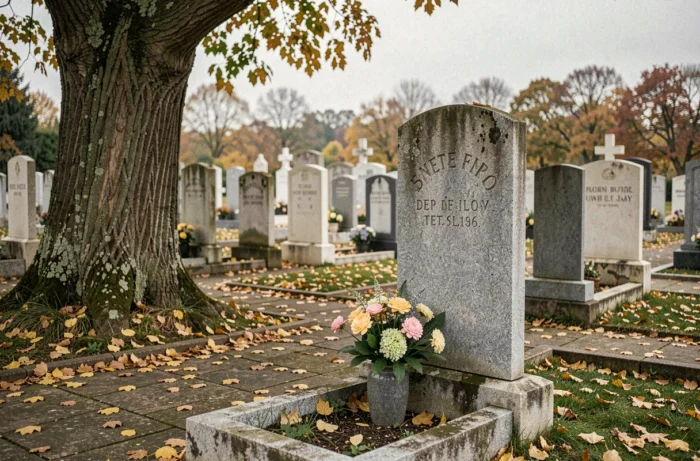
Price differences widen on optional items. Three of them weigh particularly heavily:
- The choice of coffin: materials, interior finishes, and wood types can vary the price from simple to triple. A standard oak model does not cost the same as a mahogany coffin with satin lining.
- The funeral concession: depending on the municipality and the chosen duration (temporary, thirty-year, perpetual), the price ranges from a few hundred euros to several thousand. Major cities have significantly higher prices than rural municipalities.
- Conservation care (embalming): this service, sometimes presented as a given, remains optional in most cases. Its cost is, however, far from negligible.
Checking the category of each item on the standardized quote remains the best reflex to control the budget.
Interment or cremation: the real cost difference
Cremation is generally less expensive than interment. According to industry data, the average cost of cremation is around 4,434 euros, compared to 5,044 euros for interment. The difference, of about 600 euros, is mainly explained by the absence of land concession and digging fees.
This differential can, however, decrease or even reverse. A cremation followed by the purchase of a columbarium niche in an urban cemetery, combined with a ceremony at the crematorium with musical performance, sometimes reaches the same level as a simple burial in a rural area. The type of ceremony weighs as much as the burial method in the final amount.
Geographical disparities amplify these differences. Île-de-France has significantly higher rates than the southern or western regions, with differences that can reach 30 to 40% depending on the municipalities.
Bank ceiling and financing funeral expenses
A question systematically arises after a death: how to pay the funeral bill when the deceased’s accounts are frozen by the estate? The Monetary and Financial Code provides for a specific mechanism. The bank can release an amount directly from the deceased’s account to pay the funeral operator, without waiting for the settlement of the estate.
This funeral withdrawal ceiling was raised to 5,910 euros on January 1, 2025, and then to 5,965 euros on January 1, 2026. It is now subject to an annual adjustment indexed to inflation. In practice, this amount covers a large part of the average cost of a burial, which prevents the family from having to advance the entire expense.

For situations where the deceased’s estate is insufficient, several options exist:
- The death benefit paid by Social Security to the beneficiaries, under certain conditions.
- Funeral insurance contracts taken out during the person’s lifetime, which release a capital dedicated to financing the funeral.
- Assistance from supplementary pension funds or CCAS, available under income conditions.
Requesting multiple quotes remains the most direct lever to contain costs. The free and non-binding nature of the funeral quote, now reiterated in the mandatory information notice, makes this process simpler than ever. Families that compare at least three quotes generally notice significant differences in the same services, even within the same urban area.