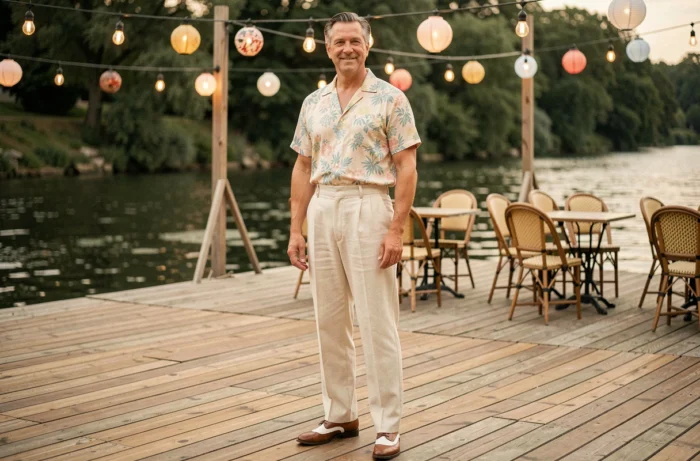
The men’s guinguette suit from the 1950s is based on a precise balance between a fitted cut, natural materials, and period details. Creating a coherent outfit for a themed evening or a retro wedding requires distinguishing between pieces truly inspired by 1950s men’s fashion and those from the world of costumes, often betrayed by shiny synthetic fabrics and approximate cuts.
Location and anticipation: the timeline that determines the outcome
Articles dedicated to the guinguette look detail visual inspirations at length but overlook a logistical constraint that has become crucial. Retro outfit specialists now recommend scouting about six months before the event and making a firm reservation four months in advance, as the most sought-after pieces disappear between April and September.
Waiting until the last moment significantly reduces choices in sizes, materials (linen, lightweight wool), and colors. The main risk is then resorting to fast fashion or costume solutions, which produce the opposite effect of what is desired.
The French rental market remains focused on independent physical boutiques operating by appointment. Fitting sessions, alterations, and maintenance are generally included in the price. This custom adjustment service makes all the difference: high-waisted trousers that fall perfectly on the shoe, a jacket with shoulders that sit just right. It is precisely this level of finish that separates a successful 1950s men’s guinguette suit from a haphazard assembly.
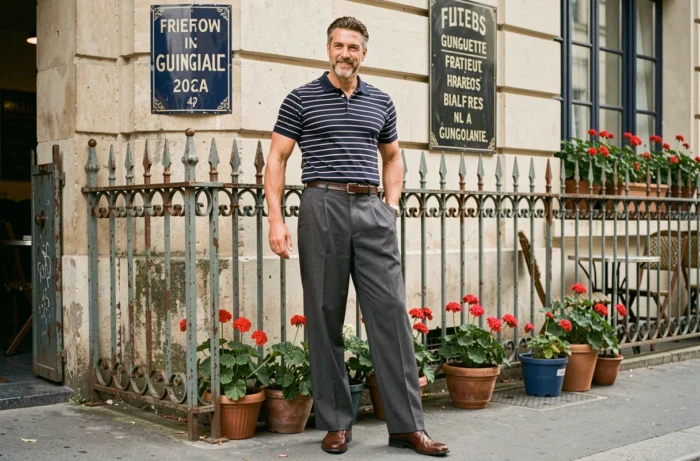
Stage costume or vintage outfit: a table of discrepancies to know
The confusion between stage costumes and vintage-inspired clothing is common. Here are the criteria that allow for distinction at the time of purchase or rental.
| Criterion | Stage costume / disguise | Authentic vintage outfit |
|---|---|---|
| Material | Polyester, synthetic satin | Linen, thick cotton, lightweight wool |
| Cut | Loose, standardized, poorly structured | Sharp shoulders, defined waist, tapered or straight trousers |
| Finishes | Visible seams, plastic buttons | Partial lining, mother-of-pearl or horn buttons |
| Colors | Saturated, shiny shades | Pale tones, beige, navy blue, light gray |
| Fit | One size or S/M/L | Alterations possible, semi-fitted cut |
A costume from the world of performance increases the risk of shiny materials and caricatured cuts. The chic style of the 1950s relies on the sobriety of materials, not on exuberance.
Shirt, trousers, and accessories: creating a coherent men’s guinguette look
The masculine silhouette of the 1950s is built around a few key pieces. The trap is wanting to accumulate everything: suspenders, bow tie, hat, pocket square. It is better to have two or three well-chosen elements than a pile of clichés.
The shirt as the pivot of the outfit
A linen or cotton shirt with an Italian collar, tucked into the trousers, immediately sets the tone. The colors to prioritize are off-white, sky blue, and beige. Washed linen, offered notably by mainstream brands, provides a relaxed fall compatible with the guinguette spirit without appearing too dressed up.
The open Italian collar without a tie remains the most versatile choice for an outdoor dance evening. It avoids the overly formal effect of a classic collar buttoned all the way up.
The high-waisted trousers, a signature of the fifties
The high-waisted pleated trousers are the most identifiable piece of the 1950s men’s wardrobe. They are worn with a braided leather belt or suspenders (not both). The straight or slightly tapered cut works better than slim, which belongs to a different stylistic era.
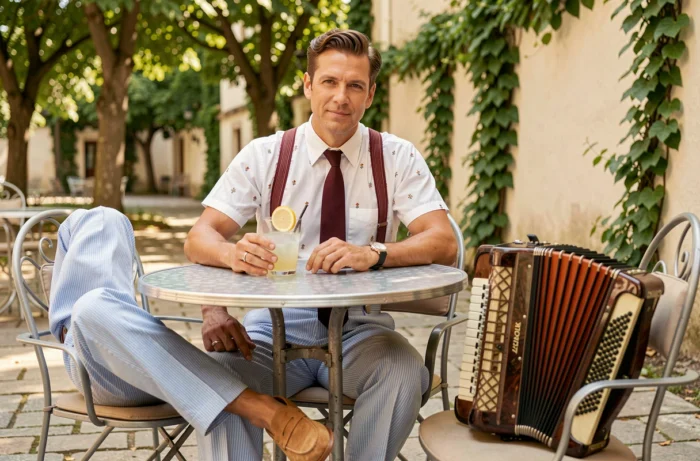
Accessories: what makes the difference
- The panama or boater hat adds a touch of summer elegance without overloading the outfit, provided a sober shape and a size proportionate to the face are chosen
- Fabric suspenders (not thin elastic) replace the belt and accentuate the vertical silhouette characteristic of the decade
- A leather strap watch with a round dial completes the look without falling into historical re-enactment
- Bicolor shoes (spectator shoes) or light leather derbies firmly anchor the outfit in the retro aesthetic
One strong accessory is enough to mark the vintage style. Two at most. Beyond that, the whole shifts into stage costume.
Second-hand or new purchase: where to find the right pieces
The second-hand market (Vinted, Le Bon Coin) is full of costumes and separate pieces made from noble materials at prices well below new. The challenge is to filter effectively: searching by material (wool, linen), by color (beige, navy blue), and by type (suit, pleated trousers) yields better results than the keyword “vintage,” which also brings up whimsical pieces.
For new items, the linen collections from major brands cover the shirt-trouser base at an accessible budget. The complement (suspenders, hat, shoes) is more easily found with artisans or in specialized thrift shops.
The budget question mainly depends on the choice between purchase and rental. For a one-time event (wedding, themed evening), renting with included alterations often represents the best balance between fitting quality and cost. For someone looking to integrate retro pieces into their daily wardrobe, buying second-hand pleated trousers and linen shirts constitutes a sustainable investment.
The criterion that weighs most in the success of a men’s guinguette outfit remains the fit. A well-tailored linen suit, even simple, produces a more elegant effect than a poorly cut complete set with all the period accessories. Material and cut take precedence over the quantity of details.